
Rule of thumb: if your door worked fine through a hot, humid summer, the one thing worth checking before the weather turns is whether that humidity left behind rust, swelling, or loose hardware that a cold front's wind can expose. The exceptions are doors that already stick, sag, or scrape the track, doors near the coast that see regular salt air, and openers that haven't been tested since spring — those need a closer look regardless of what the forecast says.
Why South Florida "Winter" Still Matters for Garage Doors
Oakland Park doesn't get freezing temperatures, but late November through February brings real changes: lower humidity, cooler nights, and the occasional cold front that rolls through with sudden gusty winds. Those fronts show up fast, sometimes dropping temperatures 15-20 degrees in a few hours. That swing causes metal components — tracks, hinges, torsion springs — to contract slightly after months of heat expansion. If a part was already borderline from rust or wear, a cold snap is often when it finally binds, squeaks, or fails.
This also overlaps with the tail end of hurricane season. Storms can still form into late November, so wind-load integrity on your door isn't something you can fully set aside just because the calendar says winter prep.
Check the Hardware Humidity Left Behind
Months of heat and moisture are hard on exposed metal, especially in homes near the coast where salt air accelerates corrosion. Before the drier months settle in, walk the door and look for:
- Rust spots on hinges, the torsion spring, and the bottom roller brackets — these are the parts that sit closest to ground moisture and splashback from afternoon downpours.
- Swollen or warped panels, particularly on wood or wood-composite doors, where trapped humidity can cause sections to bow slightly out of alignment.
- Pitted or fraying cables, which often show early wear as small bulges or broken strands near the bottom bracket.
- Loose bolts on the track brackets, since vibration from the opener over a full season of use can walk hardware loose, especially if the door's been exposed to repeated storm-door operation during summer squalls.
If you spot heavy rust on a spring or cable, don't try to work around it — a corroded spring under tension is a safety issue, not a cosmetic one.
Lubricate Before the Dry Air Sets In
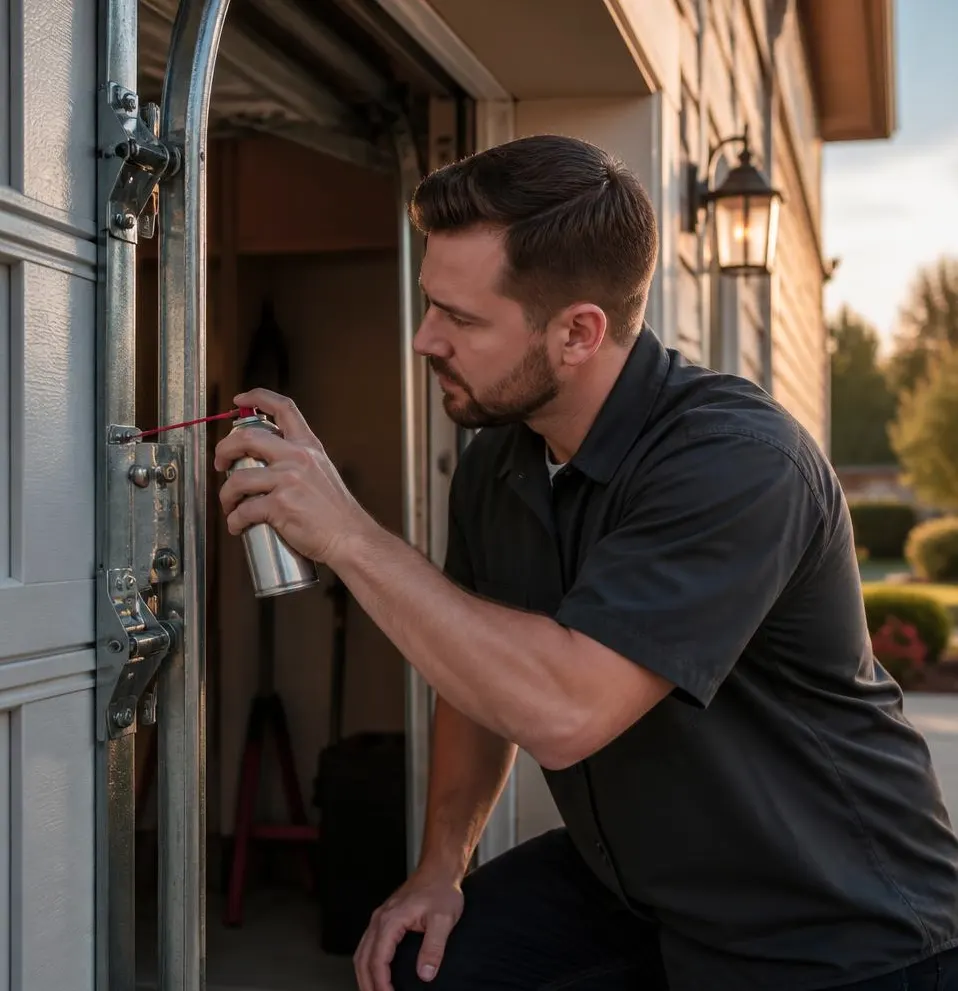
Summer humidity actually does some of the lubricating work for you by keeping metal from drying out as fast. Once the drier winter air moves in, moving parts lose that natural moisture buffer and friction increases. A few minutes with a silicone-based garage door lubricant on the hinges, rollers, and torsion spring coils will quiet things down and reduce wear going into the lower-humidity months. Skip WD-40 for this — it's a solvent, not a long-term lubricant, and it can actually attract dust and grit over time.
Test the Opener's Sensors and Battery Backup
If your opener has a battery backup, this is a good time to check it, since cooler nights combined with any brief power blips from late-season storms can drain a weak battery faster than expected. While you're at it, test the photo-eye safety sensors near the bottom of the tracks — a few months of pollen, dust, and humidity buildup can fog the lenses enough to cause intermittent reversals or a door that won't close all the way.
Re-Check Wind-Load Readiness, Not Just the Weatherstripping
Because storm systems can still develop into late November, don't treat wind-load concerns as a summer-only issue. If your door has reinforcing struts, confirm they're still securely fastened and not rusted through. Check that the track is firmly anchored to the framing — a track that's pulled slightly away from the wall won't hold up well if a late-season system brings gusty wind, even if it's not a full hurricane.
Bottom weatherstripping is worth a look too, less for cold and more for keeping out wind-driven rain during any lingering storm activity, plus the usual afternoon downpours that haven't fully stopped yet in early winter.
A Simple Pre-Winter Checklist
- Inspect springs, cables, and hinges for rust or fraying.
- Lubricate rollers, hinges, and spring coils.
- Test opener battery backup and photo-eye sensors.
- Confirm track brackets and reinforcing struts are tight.
- Replace worn bottom weatherstripping if it's cracked or flattened.
- Balance test: disconnect the opener and see if the door holds position halfway up. If it drifts, the spring tension needs adjustment.
When to Call Oakland Park Garage Door Service
If the balance test fails, if you see visible rust on a spring, or if cables look frayed, that's not a DIY lubrication fix — that's a job for our Garage Door Spring Repair and Garage Door Cable Repair teams, since these components are under heavy tension and can cause injury if handled without the right tools. If everything looks fine but you just want it checked before the season turns, our Preventive Maintenance visit covers the full inspection above — hardware, lubrication, sensor testing, and a balance check — in one appointment.
Call Oakland Park Garage Door Service today and get your door checked before the next cold front or late-season storm rolls through Oakland Park, FL.