
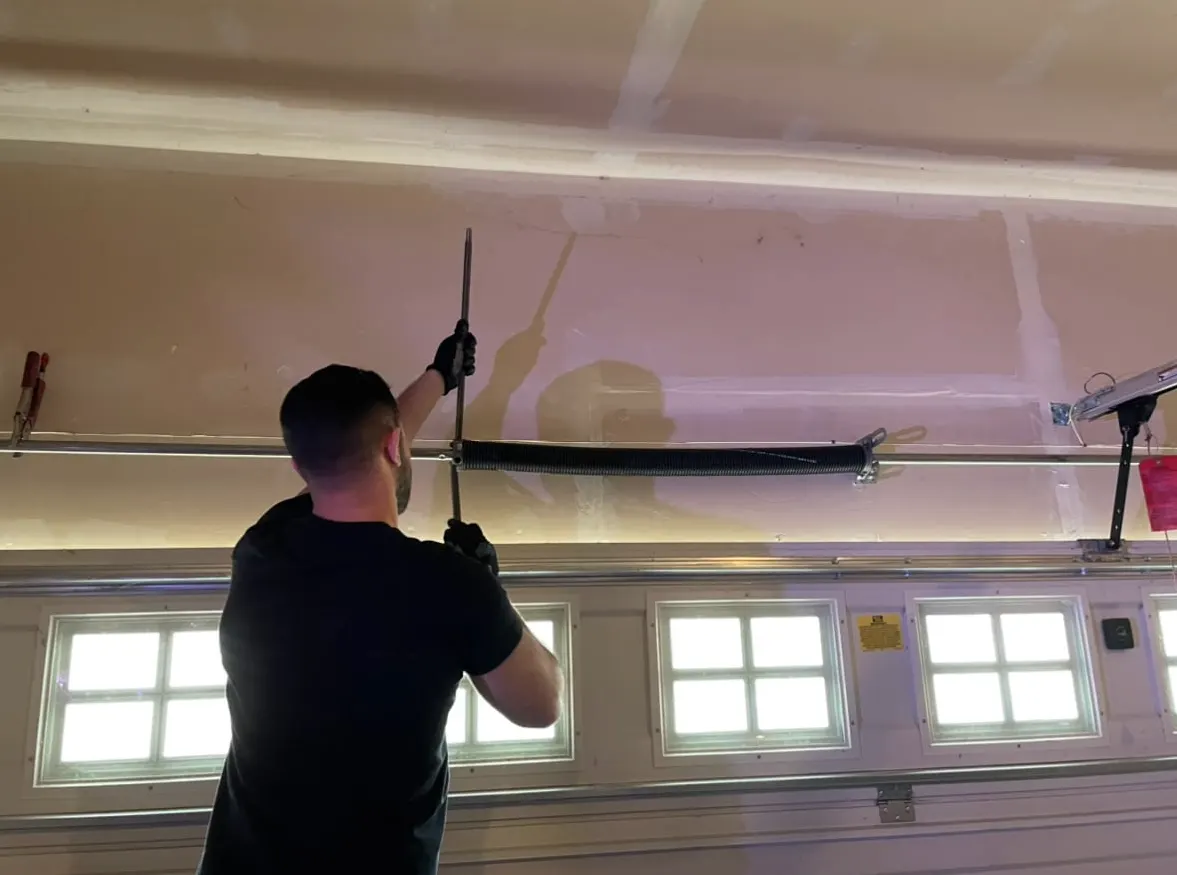
A garage door spring that lets go without warning isn't just an inconvenience. The door can drop fast enough to dent a car roof, crack concrete, or hurt anyone standing underneath it. Add in the cost of an emergency after-hours call, a jammed car you can't get out of the garage before work, and the fact that both springs usually need replacing together once one fails, and "I'll deal with it next season" gets expensive fast. The good news is that springs almost always show signs before they go. You just have to know where to look.
Walk This Checklist in Your Own Garage
Set aside ten minutes, disconnect the opener using the manual release cord, and go through these checks with the door closed.
- Gaps between coils on a torsion spring. The spring sits on a metal shaft above the door. Healthy coils sit tight against each other. If you see daylight between coils, or one section looks stretched out compared to the rest, that spring is losing tension unevenly and is close to failing.
- Rust flakes, pitting, or orange dust under the spring. Salt air moving inland from the coast speeds up corrosion on bare metal coils, and humidity keeps them damp between storms. Surface rust alone isn't an emergency, but pitting or flaking metal means the spring has lost structural integrity and can snap without any extra warning.
- The door feels noticeably heavier when lifted by hand. With the opener disconnected, lift the door about halfway. It should move smoothly and stay roughly where you leave it. If it feels like dead weight or slams back down, the spring isn't carrying its share of the load anymore.
- The door won't hold its position when open. A door that creeps down on its own, even slowly, is telling you the spring tension has dropped below what's needed to balance the door's weight.
- A loud bang from the garage with no obvious cause. This is often a torsion spring breaking in place. If you hear it, don't operate the door at all until it's inspected — a broken spring with the door still shut can let go violently the next time someone opens it.
- Jerky, uneven movement or a visible side-to-side tilt. If one side of the door rises faster than the other, one spring or cable is carrying more load than it should. Left alone, this uneven stress wears out the weaker side even faster.
- Grinding, squeaking, or a change in the sound the door makes. Springs that are wearing out often get noisier before they fail outright, especially if humidity has dried out the lubrication between the coils.
- Visible stretching or separation on extension springs. If your door uses extension springs (the long springs running along the horizontal tracks instead of a shaft above the door), look for coils that have pulled apart or a spring that looks noticeably longer than its matching spring on the other side.
- Frayed or loose safety cables running through extension springs. These cables are there to contain the spring if it breaks. If they're kinked, frayed, or missing, that's a separate safety issue that needs attention regardless of how the spring itself looks.
Torsion vs. Extension: Why It Matters for the Diagnosis
Torsion springs tend to show visible gapping in the coils as the first sign of wear, while extension springs more often show stretching or a loud snapping sound when a coil separates. Knowing which type is mounted on your door tells you exactly where to focus your inspection and what kind of failure to expect if you wait.
Why This Matters More After Storm Season
If your garage door took on extra wind load during hurricane season, or sat through weeks of afternoon downpours with higher humidity in the garage, that's added stress on hardware that was already due for a look. Moisture swelling the door itself can also throw off the balance point, making a borderline spring work harder than it should.
When to Call Oakland Park Garage Door Service
If you spot gapping coils, rust pitting, a heavier-than-normal lift, or any loud bang from the garage, stop using the door and call us before it fails completely. Our Garage Door Spring Repair service replaces worn torsion or extension springs with correctly matched hardware so both sides carry even tension — we don't recommend replacing just one spring when the other is close behind it. If your springs checked out fine but you want to catch the next issue early, our Preventive Maintenance visits cover spring tension, cable condition, and the rest of the hardware most people never think to check.
If any of these signs showed up during your walk-around, don't wait for the loud bang. Call Oakland Park Garage Door Service and we'll get a technician out to Oakland Park, FL and the surrounding area to take a proper look before it becomes an emergency.