
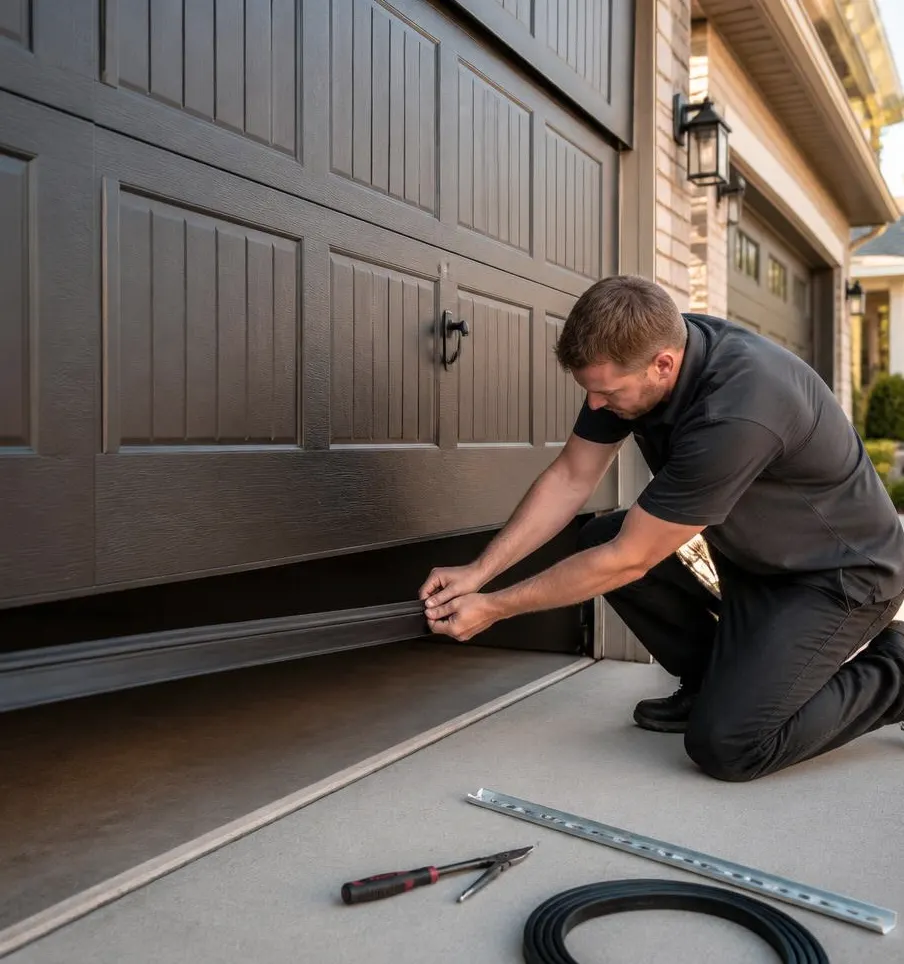
A typical call starts the same way: the homeowner presses the remote or the wall button, and the door either does nothing, moves an inch and stops, or starts to lift and reverses itself. Sometimes it's right after an afternoon thunderstorm knocked the power out for a few seconds. Sometimes the door has been sluggish for weeks and finally quit. Either way, the first thing a technician does is rule out the easy stuff before touching springs or cables.
What You'll Usually Notice First
- The opener motor hums but the door doesn't move, or nothing happens at all
- The door lifts a few inches, then stops or reverses
- The door feels extremely heavy when you try to lift it by hand
- One side of the door is higher than the other, or it looks crooked in the frame
- You can hear the motor running but see no movement in the trolley or chain
Each of these points to a different stage in the system, which is why a tech checks things in a specific order rather than guessing.
1. Power to the Opener
Garage circuits are frequently on a GFCI outlet, and humidity or a power surge from a storm can trip it without any visible sign. A tech checks the outlet, the breaker panel, and whether the opener's display lights are on at all. This takes thirty seconds and solves more "dead" garage doors than people expect, especially after the kind of brief outages that come with Florida's hurricane-season storms.
2. Safety Sensor Alignment
If the door moves partway and reverses, or won't close at all, the photo-eye sensors near the floor on each side of the track are next. Wind-driven debris, spiderwebs, pollen, or a sensor bracket bumped slightly out of alignment during a storm will all cause this. The fix is simple: clean both lenses, confirm the indicator lights are steady rather than blinking, and nudge the bracket until they line up.
3. Manual Disconnect or Release Cord
If the opener runs but the door doesn't move at all, the trolley may have been disconnected from the carriage, often because someone pulled the manual release cord during a power outage and never reset it. A tech checks whether the red cord is engaged and reconnects the trolley to the carriage before assuming anything is actually broken.
4. Broken or Worn Springs
This is where things get mechanical. If the door feels like dead weight when lifted by hand, or there's a visible gap in a torsion spring above the door, the spring has let go. Springs are under heavy tension and wear out faster in coastal humidity, where moisture speeds up metal fatigue and corrosion. This is not a DIY repair — the tension involved can cause serious injury. A technician releases the tension safely, matches the replacement spring to the door's weight and cycle rating, and tests the balance before calling the job done.
5. Frayed or Snapped Cables
If one side of the door hangs lower than the other, or it looks tilted in the opening, a cable has likely frayed or come off its drum. Cables take on extra strain when a spring is already weak, so a tech checks both at the same time. Replacement means removing tension from the system, rethreading new cable through the drum, and rebalancing the door.
6. Rollers Off the Track
A door that's visibly crooked or jammed partway up often has one or more rollers that have jumped the track. This can happen from a hard impact, a bent track, or hardware that's loosened over time from humidity swelling the wood jamb it's mounted to. The fix involves realigning or replacing the track section, checking for bent spots, and reseating the rollers so the door glides smoothly again.
7. Opener Drive Mechanism
If the motor clearly runs but nothing moves and the trolley is connected, the problem is usually in the drive itself — a stripped plastic gear inside the motor housing, a snapped drive belt, or a chain that's jumped its sprocket. These wear out over years of use and tend to fail without much warning. Depending on the opener's age and condition, the fix is either replacing the internal gear or chain, or installing a new opener altogether if the unit is older and parts are hard to source.
8. Rust or Swelling from Moisture
Last on the list because it's rarely the sole cause, but a contributing factor: tracks and hardware near the coast corrode faster from salt air, and wood door frames can swell during Florida's humid stretches, pinching the door's path just enough to cause binding. A tech checks for this especially on older installations or homes close to the water, and addresses it with hardware replacement, lubrication, or track adjustment.
When to Call Oakland Park Garage Door Service
If your door won't open and the obvious stuff — power, sensors, the release cord — checks out fine, it's time to call. A snapped spring, frayed cable, or off-track door isn't something to push through with brute force; doing so can damage the opener or bend the track further. We handle Garage Door Spring Repair, Garage Door Cable Repair, and Off Track Door Repair for homes and businesses throughout Oakland Park and nearby communities, and we'll walk through the diagnosis with you so you know exactly what failed and why before any work starts.
If your garage door in Oakland Park, FL won't open, give us a call. We show up fast, diagnose it on the spot, and get the door working the right way the first time.