
The Moment You Notice It
It's a cooler November morning, the kind that rolls in after a front pushes through Broward County, and you hit the wall button on your way out. The door doesn't lift clean off the ground the way it usually does. There's a split-second of resistance, almost like it's been glued to the slab, followed by a groan from the opener as it fights through the first few inches. Or maybe the whole cycle just feels heavier and slower than it did a month ago, with the motor working harder than it should to get the door moving.
Homeowners sometimes describe this as the door being "frozen," and while actual ice isn't the culprit here, the sensation is real. Overnight humidity, condensation on the concrete, and the kind of moisture swings this climate produces can genuinely cause a door to stick or drag. The fix depends on figuring out which part of the system is actually responsible, and that means checking things in the order a technician would, starting at the bottom of the door and working up.
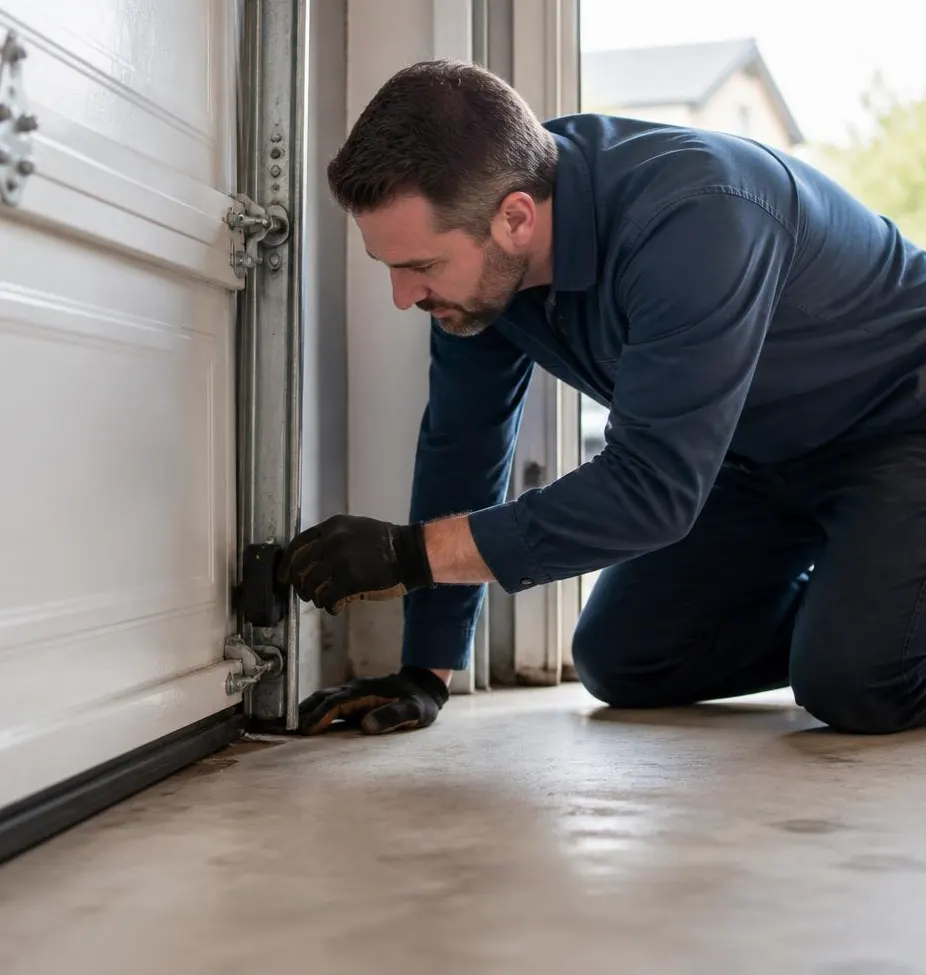
Cause 1: The Bottom Seal Has Suction-Stuck to the Slab
This is the most common reason a door feels stuck right at the floor. The rubber weather seal along the bottom edge of the door sits against the concrete all night. When humidity is high and the slab cools faster than the air around it, condensation forms underneath that seal. By morning, you've got a thin film of moisture creating light suction between the rubber and the concrete, similar to a wet rubber mat on a tile floor.
A technician checks this first because it's the fastest thing to confirm and rule out. The fix is straightforward: inspect the seal for cracking, flattening, or debris embedded in it, and replace it if it's worn or no longer sealing evenly. A fresh seal, properly seated in its track along the bottom of the door, breaks the suction problem because it doesn't lie as flat against the slab.
Cause 2: Rust or Debris in the Tracks
Next comes the tracks on either side of the door. Salt air near the coast and the general moisture load in this area speed up surface rust on steel tracks, especially if they haven't been cleaned in a while. Afternoon downpours also wash grit, leaves, and fine debris into the track channel, where it sits and dries into a gritty film that the rollers have to push through every cycle.
The check here involves running a hand along the inside of the track, feeling for rough spots, flaking rust, or buildup. Light surface rust gets wire-brushed off and the track wiped clean. Heavier corrosion or a bent section usually means the track needs to be replaced rather than patched, since a warped track will keep catching the rollers no matter how clean it is.
Cause 3: Corroded or Dry Rollers and Hinges
If the tracks are clean but the door still drags, the rollers and hinges are the next stop. These small metal parts take a beating in a humid, salt-tinged environment. Standard lubricants can wash out or gum up faster here than they would in a drier climate, leaving metal-on-metal contact that shows up as grinding, squeaking, or that heavy, sluggish feel when the door starts moving.
The fix is to inspect each roller and hinge for pitting or seized movement, replace any that are too far gone to turn freely, and apply a silicone-based lubricant suited to humid conditions rather than a household oil that attracts dust and breaks down quickly. This step alone resolves a surprising number of "sluggish door" complaints.
Cause 4: Spring Tension Thrown Off by Corrosion
Springs are checked next because they do the heavy lifting, literally. A spring coated in surface rust doesn't coil and release as smoothly as a clean one, and corrosion can subtly change how much force it delivers. This often shows up as a door that's noticeably harder to lift by hand, or an opener that strains more than it used to even after the tracks and rollers are sorted out.
Diagnosing this means watching how the door balances when disconnected from the opener and manually lifted partway. If it doesn't hold its position or feels uneven, the spring tension is off. Depending on the extent of the corrosion, this is either a tension adjustment or a full spring replacement, and it's not a DIY step given how much force these components store.
Cause 5: Opener Settings Compensating for Added Drag
Last on the list is the opener itself. Sometimes the drag caused by any of the issues above has been gradual enough that the opener's force settings have been quietly straining to compensate for months. Even after the mechanical issues are fixed, the opener may still run rough until those settings are recalibrated.
This involves adjusting the up and down force limits so the motor isn't overcompensating for resistance that no longer exists. Skipping this step after a repair means the door may still feel sluggish even though the physical problem is solved.
When to Call Oakland Park Garage Door Service
If your door is sticking at the bottom, dragging through its cycle, or straining the opener more than it used to, it's worth having it looked at before a spring or cable gives out under that extra strain. Oakland Park Garage Door Service can handle the full diagnostic, from a simple Garage Door Cable Repair if corrosion has frayed a cable, to a complete Preventive Maintenance visit that cleans, lubricates, and rebalances the whole system so it holds up through another humid season.
If your garage door in Oakland Park, FL is sticking, dragging, or working harder than it should, call Oakland Park Garage Door Service for a fast diagnosis and a fix that actually lasts.