
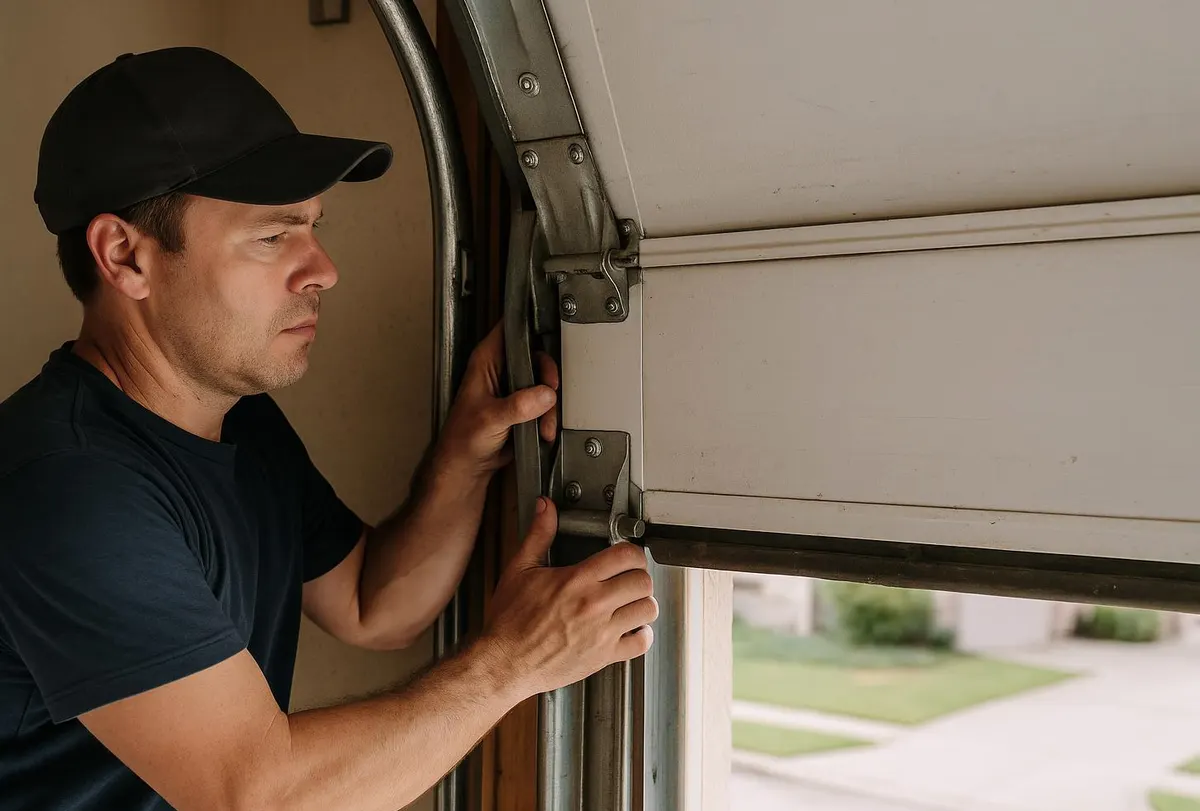
What a Technician Sees on These Calls
The pattern is almost always the same. Someone finishes converting their garage into a home gym, workshop, or extra living space, and the door gets opened maybe once a month instead of twice a day. Eighteen months later, a service call comes in because the door won't budge, the opener grinds but doesn't lift, or there's a rust streak down one track nobody noticed before. The homeowner is usually surprised. The spouse who argued "we barely use it, it'll be fine" is usually wrong.
A garage door that sits mostly closed in a humid, salt-air climate doesn't go dormant — it ages differently, and often worse, than one that cycles daily.
The Core Disagreement, Settled
One partner thinks converting the space means the door becomes decorative — basically a wall now. The other suspects it still needs real attention. The second person is right. Unless the opening has been permanently framed in and replaced with actual wall construction, that's still a functioning garage door with springs under tension, rollers in tracks, and a motor wired to pull a few hundred pounds of panel against gravity. Converting the room doesn't convert the hardware.
Temperature Swings Get Worse, Not Better
A converted gym or workshop usually gets a window unit, a fan, or at least some kind of climate control, because non-insulated garage doors in this heat turn the space into an oven by early afternoon. That's smart for comfort, but it changes the stress on the door itself. You now have cooled, dehumidified air on one side and hot, saturated outdoor air pressing against steel panels on the other. That temperature and humidity gap accelerates condensation on the inside face of the door, which is exactly the kind of moisture that starts rust at hinge points and panel seams.
Humidity Finds the Metal
Even without added AC, a room that's used daily — weights, tools, foot traffic — holds more ambient moisture than an empty garage ever did, especially with afternoon downpours pushing humidity up outside. Add in proximity to salt air if the property is anywhere near the coast, and the combination speeds up corrosion on springs, hinges, and the bottom of steel panels. Wood-look composite doors have their own version of this problem: moisture gets into edges and screw holes and the panel swells or warps slightly, which throws off alignment in the track.
Doors That Rarely Move Age Faster Than Doors That Do
This is the part that surprises people most. A door that opens and closes daily keeps its springs flexing, its rollers turning, and its lubricant distributed. A door that sits closed for weeks at a time doesn't get that benefit. Torsion springs left under constant tension without cycling can develop weak spots or uneven wear. Rollers sitting still in one position start to pit the track surface right where they rest. Weatherstripping along the bottom compresses in one spot and stops sealing evenly. The first time someone does need to open that door — to move gym equipment in, haul lumber out, or just air the space out — it's often the stiffest, loudest, most reluctant it's been in months.
Wind-Load Rules Don't Pause for Renovations
If the conversion involved any changes to the opening — resizing it, adding a man-door next to it, boxing in part of the garage — the original garage door's wind-load rating and the bracing around it matter more, not less. South Florida wind-load requirements exist because garage doors are one of the most common failure points during hurricane-force winds; a door that fails can let pressure build inside the structure and cause much larger damage. A converted space with a weakened or improperly reinforced opening is a liability during storm season, which runs well into the fall.
What Actually Protects the Door in a Converted Garage
- Open and close it on purpose. Once every week or two, even if nothing needs to go in or out, keeps springs cycling and rollers moving instead of seizing in place.
- Watch for condensation. If the inside of the door is visibly damp in the morning, that moisture is sitting on metal components too, not just the panel surface.
- Keep weatherstripping and seals in view, not buried behind equipment. Gym mats and workbenches pushed against the bottom seal trap moisture against it and block airflow that would normally help it dry out.
- Don't assume insulation replaces door maintenance. Insulating the room helps comfort; it doesn't stop springs from aging or tracks from needing lubrication.
- If the opening was modified at all, confirm the door and header still meet wind-load standards. This is not optional in hurricane season.
When to Call Oakland Park Garage Door Service
If the door has been sitting mostly closed since the conversion and now feels heavy, uneven, or noisy when it does move, that's worth a preventive maintenance visit before it becomes a full breakdown — lubrication, spring tension check, and roller inspection catch most of this early. If there's visible rust on springs or cable, or the door is sagging slightly on one side, that points to garage door cable repair or spring service rather than something to keep forcing with the opener. And if the opening itself was altered during the conversion, we can check that the door and hardware still meet the wind-load expectations for this area before the next storm season tests it for you.
If your converted garage's door has gone quiet for the wrong reasons, call Oakland Park Garage Door Service and we'll get it checked, serviced, and ready to actually open when you need it.